What Does DJ Stand For?
What does DJ stand for? DJ stands for “disc jockey”, a term originally used to describe someone who played recorded music for an audience. The word “disc” referred to the records being played, while “jockey” referred to the person operating and selecting them.
The meaning of DJ has remained the same, but DJing itself has changed dramatically. Modern DJs can use digital controllers, laptops, professional decks and specialist software rather than physical records.
Today, DJs perform at weddings, parties, clubs, festivals and corporate events, as well as on radio. So, where did the term come from, and what does being a DJ actually involve?
What Does DJ Stand For in Music?
In music, DJ stands for disc jockey.
The term comes from an era when recorded music was primarily played using physical records. These records were known as discs, while the person selecting and playing them became known as the disc jockey.
Although the technology used by DJs has evolved, the name has remained.
Vinyl records were eventually joined by CDs and later by digital music, laptops, DJ controllers and specialist software. Therefore, a modern DJ may not use a physical disc at all but is still known as a disc jockey.
What Does DJ Stand For and Where Did the Term Come From?
Understanding what DJ stands for also means looking at where the term originated.
The history of the disc jockey is closely connected to radio.
American journalist and radio commentator Walter Winchell is widely credited with using the term “disc jockey” during the 1930s when referring to radio presenter Martin Block.
Block became known for presenting recorded music to listeners through his Make Believe Ballroom radio programme.
The term combined “disc”, referring to the records being played, with “jockey”, describing the person controlling and selecting them.
Over time, “disc jockey” was shortened to DJ.
As recorded music became increasingly important across radio, clubs and live entertainment, the role of the DJ continued to develop.
What Does DJ Mean Today?
While the answer to what DJ stands for remains disc jockey, the modern meaning of DJ has become much broader.
A DJ selects and plays recorded music for an audience. However, professional DJing can involve much more than simply pressing play.
Depending on the event or setting, DJs can:
- Select music for a particular audience
- Mix tracks
- Create smooth transitions between songs
- Control the pace and energy of a set
- Read the crowd
- Take song requests
- Use EQ and effects
- Make announcements
- Coordinate important musical moments
The responsibilities can also change significantly depending on where the DJ is performing.
For example, a wedding DJ may need to manage a first dance before keeping guests dancing throughout the evening. A club DJ may instead concentrate on creating a continuous mix and maintaining the energy of the dance floor.
What Does a Wedding DJ Do?
A wedding DJ provides music and entertainment specifically for weddings and receptions.
Before the wedding, DJs may discuss musical preferences with the couple, including important songs, genres they enjoy and songs they would prefer not to hear.
During the reception, the DJ may provide music for important moments such as the couple’s entrance and first dance.
Later in the evening, their focus typically shifts towards the dance floor.
This means a wedding DJ needs to balance the couple’s preferences with the reactions of the guests.
What Does a Party DJ Do?
A party DJ provides music for birthdays, anniversaries, celebrations and other private events.
Party DJs often perform for audiences containing different age groups and musical tastes.
Because of this, reading the crowd is important.
A DJ may prepare music before an event, but the songs that work best on the night will depend on the people in the room. Being able to change genres, respond to requests and adjust the energy can make a significant difference.
What Does a Club DJ Do?
A club DJ performs music in nightclubs, bars and similar venues.
Rather than simply playing individual songs from beginning to end, club DJs commonly mix tracks together to create a continuous set.
Timing, track selection, beatmatching, phrasing and transitions can therefore play an important role.
Club DJs may also specialise in particular genres, depending on the venue and audience.
What Does a Radio DJ Do?
The history of what DJ stands for is closely connected to radio DJs.
A radio DJ or radio presenter can select and introduce music as part of a broadcast.
However, the role may involve much more than playing songs. Radio DJs can speak to listeners, conduct interviews, discuss current topics and present different sections of a programme.
Radio therefore remains one of the clearest links between the original disc jockey and the modern meaning of DJ.
What Does a Mobile DJ Do?
A mobile DJ travels between different venues rather than working permanently in one club or location.
Mobile DJs are commonly hired for weddings, birthday parties, corporate events and private celebrations.
Depending on the venue, they may bring their own DJ equipment, speakers, microphones and lighting.
This makes mobile DJing particularly relevant to event entertainment because the DJ must be able to adapt to different venues and audiences.
Why Are DJs Called Disc Jockeys If They Don’t Use Discs?
This is one of the interesting things about what DJ stands for.
The technology changed, but the name didn’t.
Early disc jockeys worked with physical records. Later DJs adopted CDs, digital decks, laptops, controllers and DJ software.
A modern DJ could perform an entire event without using a single vinyl record or CD.
However, DJ still means disc jockey because the term became established decades before digital DJing existed.
What Equipment Does a DJ Use?
Modern DJ equipment can vary depending on the DJ and the type of event.
A typical setup may include:
- DJ controller or professional decks
- DJ mixer
- Laptop
- Headphones
- Speakers
- Microphones
- Lighting equipment
- DJ software
- Digital or physical music library
Not every DJ uses the same setup.
For example, a nightclub may already have professional equipment installed. In comparison, a mobile DJ performing at a wedding or party may need to bring most of their equipment to the venue.
Equipment alone does not make someone a good DJ, though. Knowing how and when to use the music is equally important.
What Does a DJ Do With Headphones?
Headphones are one of the most recognisable pieces of DJ equipment.
DJs can use headphones to preview or cue a track before the audience hears it.
This allows the DJ to prepare the next song while another track is still playing through the speakers.
Depending on the mixing style, headphones can also help with beatmatching, timing and deciding exactly when to introduce the next track.
What Is the Difference Between a DJ and a Music Producer?
Understanding the difference between DJs and producers is useful when looking at the modern meaning of DJ.
A DJ primarily selects, plays and mixes recorded music for an audience.
A music producer creates and develops music. This can involve composing, arranging, recording and manipulating sounds to create an original track.
However, the two roles frequently overlap.
Some DJs produce their own music, while many music producers also perform DJ sets.
Therefore, someone can be a DJ, a producer or both.
What Does a DJ Actually Do?
Knowing what DJ stands for doesn’t fully explain what DJs actually do.
At its most basic level, a DJ selects and plays music for an audience.
Professional DJing, however, involves making decisions continuously.
A DJ might decide which song should come next, when to change genre, whether to take a request and how long to stay with a particular style of music.
At a live event, DJs can also watch how the audience reacts.
If one style is filling the dance floor while another causes people to leave it, the DJ can adjust the music accordingly.
This ability to react in real time is one of the biggest differences between having a DJ and simply pressing play on a fixed playlist.
Does DJ Stand For Digital Jockey?
No. DJ stands for disc jockey, not digital jockey.
“Digital jockey” can sound believable because modern DJs regularly use digital equipment.
However, the term DJ existed long before digital music technology.
The “disc” in disc jockey originally referred to the physical records played by early DJs.
What Skills Does a DJ Need?
Different types of DJs require different skills, but there are several abilities that are useful across DJing.
These include:
- Music knowledge
- Track selection
- Timing
- Beatmatching
- Mixing
- Understanding song structure
- Using DJ equipment
- Reading an audience
- Communication
- Remaining calm under pressure
For event DJs, understanding the audience can be particularly important.
A technically perfect transition won’t necessarily fill a dance floor if the next song isn’t right for the people in the room.
Likewise, strong song selection can help maintain the atmosphere throughout a wedding, party or other event.
What Does DJ Stand For? Frequently Asked Questions
What Is the Full Meaning of DJ?
The full meaning of DJ is disc jockey. The term originated when DJs played recorded music using physical records or discs.
What Does DJ Stand For in Music?
In music, DJ stands for disc jockey. Today, DJs can select, play and mix recorded music using equipment such as decks, controllers, mixers and laptops.
Why Is a DJ Called a Disc Jockey?
A DJ is called a disc jockey because early DJs played physical records. “Disc” referred to the record, while “jockey” referred to the person controlling and selecting the music.
Does DJ Stand For Disc Jockey or Digital Jockey?
DJ stands for disc jockey. Digital jockey is sometimes mistakenly assumed to be the meaning because modern DJs use digital technology, but disc jockey is the established term.
Do DJs Still Use Vinyl Records?
Some DJs still perform using vinyl records. However, modern DJs can also use CDJs, digital decks, controllers, laptops and specialist DJ software.
What Does a DJ Actually Do?
A DJ selects and plays recorded music for an audience. DJs may also mix tracks, take requests, read the crowd, make announcements and control the musical flow of an event.
Can Anyone Become a DJ?
DJing can be learned through practice. Beginners generally start by understanding basic DJ equipment, song structure, cueing, beatmatching and transitions before developing more advanced mixing and crowd-reading skills.
What Does DJ Stand For? From Disc Jockeys to Modern DJs
So, what does DJ stand for? DJ stands for disc jockey.
The term comes from an era when DJs played physical records, but DJing has developed significantly since then.
Modern DJs can perform at weddings, parties, clubs, festivals, corporate events and on radio using everything from vinyl records to sophisticated digital equipment.
However, the fundamental idea remains similar: selecting the right music and presenting it effectively to an audience.
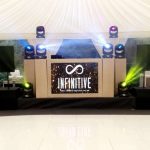
At Infinitive Music, we understand that successful event DJing involves more than putting songs into a playlist. Reading the room, understanding the occasion and choosing the right music at the right moment can completely change the atmosphere of an event.
If you’re planning a wedding, party or event in Birmingham, get in touch with Infinitive Music to discuss the music and entertainment for your event.